Why Roland?
Roland has been shaping the sound of popular music for over fifty years. The Roland TR-808 drum machine alone powered iconic moments across decades — from Marvin Gaye’s Sexual Healing to Kanye West’s 808s & Heartbreak to Taylor Swift’s Blank Space.
The Jupiter-8 and Juno-60 synthesizers defined the sound of the 1980s, with the Jupiter-8 powering the bassline and synth brass on Michael Jackson’s Thriller. Even Culture Club’s Karma Chameleon ran its signature riff through a Roland JC amp. When a brand carries that kind of legacy in its DNA, even its entry-level instruments carry weight.
The GO:KEYS 3 is not Roland’s flagship. It doesn’t pretend to be. But in the hands of a serious composer, it punches well above its price point.
What It Is and Why I Chose It?
I needed a keyboard that could plug directly into my Mac via USB-C, trigger sounds instantly, and get out of the way when inspiration struck. No complicated setup. No driver installations. No latency fights. The GO:KEYS 3 does exactly that.
Under the hood it runs Roland’s ZEN-Core sound engine — the same engine found in flagship Roland instruments like the FANTOM and JUPITER-X — giving access to over 1,000 sounds from Roland’s historic library.
That’s not beginner-level sound design dressed up in a budget chassis. That’s serious sound architecture in a portable, affordable package.
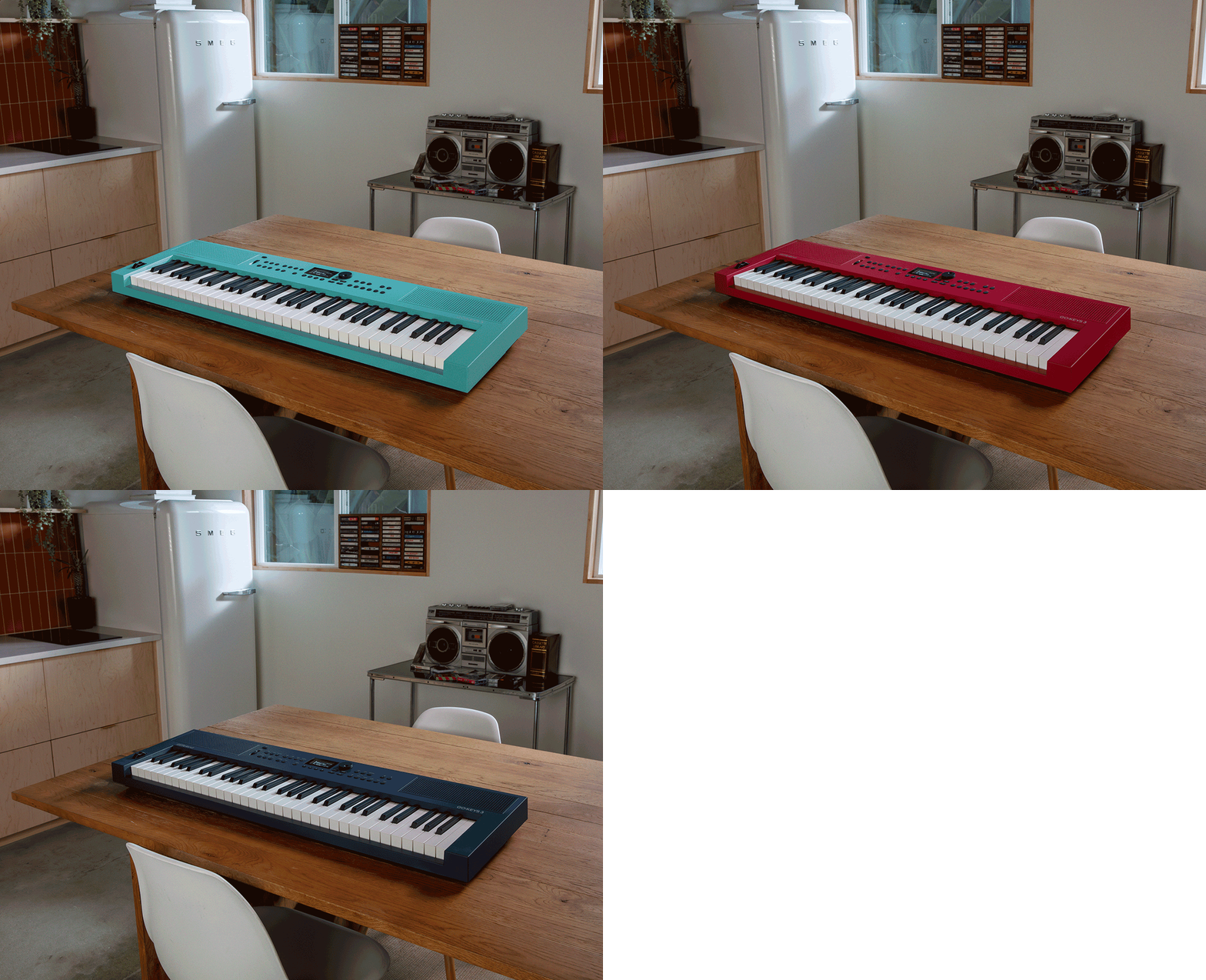
Photograph Sourced From: Roland
What I Actually Use It For?
My GO:KEYS 3 sits at the centre of every composition I start. I use it to lay down chord progressions, explore atmospheric pads, and sketch melodic ideas before committing anything to FL Studio.
The 61-key layout gives enough range for serious playing without dominating a home studio desk. The built-in chord progression feature is genuinely useful for breaking creative blocks — not as a crutch, but as a starting point to react against.
I’ve started tracks on this keyboard that ended up as full productions simply because one sound, one chord, sparked the direction.
What Surprised Me?
Artists like Tones and I have used the Roland GO:KEYS in their live setup, and Italian DJ and producer Giolì has been spotted using it in studio sessions. That surprised me when I first discovered it — this isn’t just a bedroom hobbyist’s tool. Working musicians reach for it because it delivers real Roland sound in a form factor that travels, fits any desk, and connects to any modern setup without ceremony.
The built-in speakers are also better than they have any right to be at this price. I tested compositions on them before finalising mixes and they gave an honest representation of how music sounds on consumer-level playback — which is exactly what you need.
Who It’s Right For?
If you’re a producer who wants a keyboard that connects, inspires, and disappears into your workflow — the GO:KEYS 3 is it. If you need 88 weighted keys for serious piano performance, look elsewhere. But for composition, sketching, and sonic exploration, this keyboard earns its place on any desk.
Honest Verdict
Roland built the GO:KEYS 3 for people who want to make music, not configure equipment. As a self-taught producer working entirely alone, that philosophy matches mine exactly. It’s not the most powerful keyboard Roland makes. It’s the most useful one I own.